

LES BALLETS AFRICANS
February 12, 2026
Made possible through the generosity of Melinda and Norman Payson
Aspen District Theater
FULL PROGRAM
MANSA MUSA: KING GOLD (The Mali Empire)
——
Special Acknowledgments
His Excellency Mr. Mamadi DOUMBOUYA, President of the Republic of Guinea.
Mr. Moussa Moïse SYLLA, Minister of Culture and Arts of the Republic of Guinea.
Mr. Morissanda KOUYATE, Minister of Foreign Affairs, African Integration, and Guineans Abroad.
Mr. Aboubacar Sidiki CONDE, National Director of Culture and Historical Heritage.
Mr. Amine TOURÉ, Assistant National Director of Culture and Historical Heritage.
——
Artistic and Technical Team
Artistic Director: Manana CISSÉ
Choreographer: Moustapha BANGOURA
Administrator: Théodore Kessely GUILAVOGUI
Musical Director: Mamoudou CAMARA (Mansa Camio)
Tour Director & Lighting Designer: Tim SPEECHLEY
Photography and Videography: Tom MARSHAK
Production Assistant & Technical Support: Djibril DIAWARA and
Aboubacar Sidiki CAMARACompany Manager: Mamoudou CONDE
Company Assistant Manager: Sékou Tepakalunda CONDE
Management and Representation: La Foundation Aicha Inc.
——
Company Artists
Dancers / Singers
Djeli Kany DIAWARA · Kensa CAMARA · Kadiatou DABO · Fatoumata CAMARA · Mariama CAMARA · Fatou KEITA · Mabinty BANGOURA · Mamadama CONTE · M’Mah KEITA · M’Mah KOUYATE ·
Mariama TOURE · Namarie CAMARA
Dancers / Singers (Male)
Aboubacar Fonceka SOUMAH · Mamadouba SYLLA · Yamoussa DAMBA ·Ansoumane KEITA ·
Boubacar DRAME · Mamadou Saliou KEITA · Billy CONDE · Fode Mohamed CISSE · Mohamed SYLLA
Musicians
Mamady MANSARE · Bangaly SOUMAH · Ibrahima CONDE · Bandjan KOUMBADINO ·
Ibrahima KEITA · Ibrahima CAMARA · Lamine CAMARA · Ansoumane CONDE ·
Mohamed Lamine BANGOURA · Mohamed Kelonton CONDE · Mohamed Lamine SYLLA
——
History of Les Ballets Africains
Les Ballets Africains were created in Paris in 1952 by the renowned Guinean choreographer Keïta Fodéba, with the support of many African heads of state.
They achieved international success until 1958, the year of Guinea’s independence, when the troupe was invited to become the National Ensemble of the Republic of Guinea. Since then, Les Ballets Africains have toured the world, sometimes remaining on tour for more than two consecutive years.
Between 1958 and 1968, they left a lasting impression on Broadway, captivating audiences with their unique fusion of traditional African dances, music, and storytelling. Their presence during this decade helped introduce and celebrate the richness of African cultural heritage on one of the world’s most prestigious stages.
On an exceptional tour, they performed in 165 capital cities, giving 695 performances over 750 days, traveling 180,000 km by plane, 33,000 km by train, and 21,000 km by road.
Les Ballets Africains are recognized as true traveling ambassadors, proudly embodying the values and aspirations of their people. Their mission is to foster a better understanding of Africa, creating the conditions for healthy and fruitful cooperation between Africa and the rest of the world.
Whether in Sydney, Paris, London, Rio, Berlin, Tokyo, Moscow, New York, Chicago, or Los Angeles, their performances have always generated unanimous enthusiasm and repeated invitations to return.
Under the artistic direction of Manana CISSÉ, assisted by Moustapha Bangoura, the company presents a unique blend of powerful traditional dance, music, and narration that captivates audiences worldwide at every performance.
——
The Birth and Reign of Mansa Musa
Birth and Origins
Mansa Moussa, whose full name was Musa Keïta I, was born around 1280 into the prestigious Keïta dynasty, founded by Soundiata Keïta, the father of the Mali Empire. He was Soundiata’s great-nephew and belonged to the Manding royal lineage, deeply rooted in the political, spiritual, and cultural traditions of West Africa.
Raised at the imperial court, Mansa Musa received comprehensive training in:
• Governance and diplomacy
• Oral traditions and Manding laws
• Islamic religion and classical knowledge
• Military strategy and imperial administration
Accession to the Throne
Before departing, Abu Bakr II appointed Musa as regent (kankoro-sigui), allowing him to gain solid experience in governance. At his coronation, Musa received the title of Mansa, meaning emperor, king of kings.
——
The Reign of Mansa Musa (1312–1337)
The reign of Mansa Musa marked the golden age of the Mali Empire.
Expansion and Stability
• Expansion of the empire’s borders
• Securing of trans-Saharan trade routes
• Control of the gold mines of Bambouk, Bouré, and Galem
Economic Power
• Mali produced a major share of the world’s gold in the 14th century
• An unprecedented imperial treasury
• An efficient administrative system based on provincial loyalty
Cultural and Religious Influence
• Construction of monumental mosques (Djinguereber, Gao)
• Development of Timbuktu as an intellectual capital
• Strong support for education, manuscripts, and scholars
• Integration of Islam while respecting African traditions
Historical Significance
Mansa Musa was not merely a wealthy king; he embodied a visionary head of state who transformed wealth into knowledge, culture, and lasting legacy.
His reign placed West Africa at the center of medieval world maps and narratives, making Mali a respected empire from North Africa to the Middle East and Europe.
——
Presentation – Mansa Musa
Who Was Mansa Musa and What Did He Achieve?
Mansa Musa (c. 1280–1337), full name Musa Keïta I, was the 10th emperor of the Mali Empire and one of the most powerful leaders in world history. From the Keïta dynasty founded by Soundiata Keïta, he ruled from 1312 to 1337 at Mali’s peak. Universally recognized as the richest man of all time, he was above all a visionary who transformed wealth into education, culture, faith, and diplomatic power. Major Achievements During His Reign
Expansion and Unification of the Empire
• Extension of Mali across much of West Africa
• Integration of key regions: Timbuktu, Gao, Walata
• Political and administrative stabilization of provinces
Mali became one of the largest empires of the medieval world.
Unprecedented Economic Power
• Control of major gold mines (Bambouk, Bouré, Galem)
• Mastery of trans-Saharan trade routes (gold, salt, ivory)
• Mali supplied a substantial portion of the world’s gold in the 14th century• Its wealth influenced the economies of North Africa and the Middle East
Historic Pilgrimage to Mecca (1324)
• Caravan of over 60,000 people
• Massive distribution of gold in Egypt and Arabia
• His passage caused gold prices in Cairo to fall for several years
• The world discovered the power of West Africa
Cultural and Educational Revolution
• Transformation of Timbuktu into a global intellectual capital
• Construction of the Djinguereber Mosque
• Development of the Sankoré University
• Hosting of scholars, jurists, astronomers, and architects
• Timbuktu rivaled Cordoba and Baghdad as a center of learning
Architecture and Urbanism
• Introduction of new architectural techniques
• Construction of monumental mosques in Timbuktu and Gao
• Modernization of imperial cities
• Architecture became a symbol of imperial prestige
Diplomacy and Global Influence
• Placement of Mali on European and Arab maps
• Appearance on the Catalan Atlas (1375)
• Diplomatic relations with Egypt and the Muslim world
• Mali recognized as a major international power
Legacy
Mansa Musa left an exceptional legacy:
• A stable, wealthy, and cultivated empire
• An African model of enlightened leadership
• Historical proof that medieval Africa was a center of civilization, knowledge, and prosperity
He remains today a symbol of African and universal pride, at the heart of numerous cultural, educational, and artistic projects, including King Gold –Mansa Musa.
——
Introduction
The level of excellence achieved by Les Ballets Africains over 73 years of international career reflects the artistic evolution of this prestigious company.Their constant concern for authenticity is evident in every production, a true expression of their rich cultural heritage.
“MANSA MUSA – KING GOLD” is a choreographic and musical journey through traditional Africa toward a contemporary and modern Africa, representing a refined and deeply considered artistic achievement.
——
General Atmosphere
The stage opens in a solemn, dense, and vibrant atmosphere. Rhythm emerges first as an ancestral call, a summoning of the spirits and memories of the Mandé. Sound becomes language; vibration becomes prayer.
——
ACT I: THE VOYAGE OF ABOUBACAR II
Scene 1:
SOFA: The Sofa dance and rhythm, originating in Guinea and specific to the Malinké people, is an ancient warrior dance performed to honor warriors, celebrate their bravery and victories. It was once danced on horseback, accompanied by instruments such as the Bolon, although today it has been adapted for chiefs and prominent figures.
BOLOBA: This ancestral rhythm is a Manding royal chant, born at the dawn of the Mali Empire, performed by the Djéli (griots) to proclaim the praises, lineage, and legitimacy of kings. More than music, it is a language of power and memory, linking Manding rulers to their ancestors, the land, and the sacred order of the kingdom.
LAMBAN: The Lamban (or Lambah) dance is a traditional West African dance originating from the ancient Mali Empire, performed primarily by griots (djélis), oral historians and musicians, to celebrate community events, recount history, and honor royalty. It symbolizes the history, genealogy, and identity of the Manding people.
YOKUI (Guine fare): The Yokui (or Yokoi) dance is a traditional dance of the Susu people of Guinea, often performed during festivals and celebrations to express joy, unity, and community values, notably by groups such as Les Ballets Africains. It is deeply rooted in the local traditions of the regions where the Susu people live and often symbolizes energy.
KUKU: The Kuku dance is a traditional Guinean dance, mainly performed by women from forest regions (such as the Loma), to celebrate the return of a successful fishing expedition or a good harvest. It is a joyful circular dance accompanied by drums (djembés or krin),6. symbolizing joy and the celebration of life, and is now performed at various ceremonies.
TIRIBA: The Tiriba dance, originating from the Republic of Guinea, more specifically among the Baga and Landouma peoples (regions of Boké and Boffa), is a traditional rhythm of strong historical and symbolic value. Originally, Tiriba was a masked dance performed by the troupe leader, before evolving into a celebratory dance dedicated to mothers and daughters following initiation rites. Today, Tiriba has become a very popular ternary rhythm, characterized by its joyful, festive, and unifying energy, while retaining its deep roots in the cultural identity of Guinea’s coastal communities.
Scene 2: The Ceremony of Transmission
1. TAMTAMBA (Cathedral of the rhythms of the great masks)
VEILLÉE – INSTRUMENTAL ENSEMBLE: In Manding culture, traditional dances accompanied by instrumental ensembles (kora, balafon, djembé, etc.) are performed to celebrate major social events (weddings, baptisms) or historical moments, recounting daily life and ancestral heritage. They are performed by dancers (men and women) and traditional musicians (often griots or specialized percussionists), who create a rhythmic and choreographic dialogue that reflects social cohesion and oral transmission.
SORSORNE: The Sorsornet (or Sorsorne) dance is a ritual or festive dance of Guinean origin (Baga people) and West Africa, linked to a sacred mask that brings good fortune, fertility, and abundant harvests. It is often performed during rites of passage (the transition of young girls into adulthood) or as a popular dance of the Baga people.
KONIAGUI: Men wearing richly decorated “daka” hats exalt and radiate in all directions during initiation festivals. They perform with elegance this magnificent dance of the crested headpieces of Koundara, unique to the Republic of Guinea.
BAHO / BAO (Forest): A traditional dance of the Loma ethnic group, mainly performed during a major celebration organized for young girls after their passage into adulthood.
KONKOBA: The Konkoba dance is a sacred Manding ritual originating from Siguiri in Guinea. It serves to honor devoted farmers, celebrate harvests, and invoke wisdom and spiritual protection during important events such as Tabaski or the enthronement of a chief, embodying the strength, humility, and cultural identity of the Manding people.
INTERMISSION (20 MINUTES)
ACT II: ENTHRONEMENT OF MANSA MOUSSA
Scene 1:
BALAFON SOLO
• TARA: a historic and very ancient Manding melody.
• N’GA WOBE: a tribute to women.
Scene 2:
ZAOULI (Côte d’Ivoire, Guro): The Zaouli dance is a tradition of the Gouro people of Côte d’Ivoire, created in the 1950s in homage to feminine beauty inspired by a young woman named “Djela Lou Zaouli.” It is performed by men in mask representing a female for celebrations, social unity, and education, integrating sculpture, weaving, and music. It is recognized by UNESCO as cultural heritage.
Scene 3:
DOGON (Mali): Dogon dances (in Mali) are performed by initiated men of the secret Awa (or Avva) society for profound religious and social reasons, particularly during funeral rites (Dama) to accompany the souls of the deceased, but also to celebrate life, social harmony, and ensure good harvests, serving as a sacred link between the world of the living and that of the ancestors.
Scene 4:
SABAR (Senegal, Wolof): The Sabar dance is a Senegalese social and cultural celebration, originating among the Wolof people, performed during community festivities (weddings, births) by all ages, but often initiated by women. It features energetic movements accompanied by Sabar drums, traditionally played by griots, masters of tradition and storytellers, connecting people to their history. It expresses identity, joy, unity, and connection to heritage through specific rhythms such as mbalax, passed down through generations.
Scene 5:
MAMAYA (Upper Guinea, Malinké): Mamaya is a dance and major annual Manding cultural event in Guinea, especially in Kankan, celebrating national identity, conviviality, and traditions through music and choreographed ballets, particularly after Tabaski. It serves as a platform for social cohesion, cultural diplomacy, and the sharing of cultural wealth.
Scene 6:
DOUNDOUNBA (Upper Guinea, Malinké): The Doundounba, or dunumba, is a traditional West African dance (Hamana, Guinea) celebrating strength, virility, and male endurance. It is often performed by strong men after harvests or during major festivities to demonstrate power and reinforce community bonds, symbolizing cultural identity and heritage.
Scene 7:
PERCUSSION / DRUMS: The experience and wisdom of master percussionists—men and women—meet the boldness, precision, and passion of young performers, giving rise to a sonic fresco of exceptional depth. Bodies in motion, drums, and dance become one, merging into a deeply captivating harmony where every beat becomes breath, memory, and affirmation. This apotheosis offers a vibrant, majestic, and unifying conclusion, paying solemn tribute to Africa, its creative force, intergenerational transmission, and the eternal spirit of the Mandé—a living heritage carried through time by the sacred language of percussion.
——
GUINEA
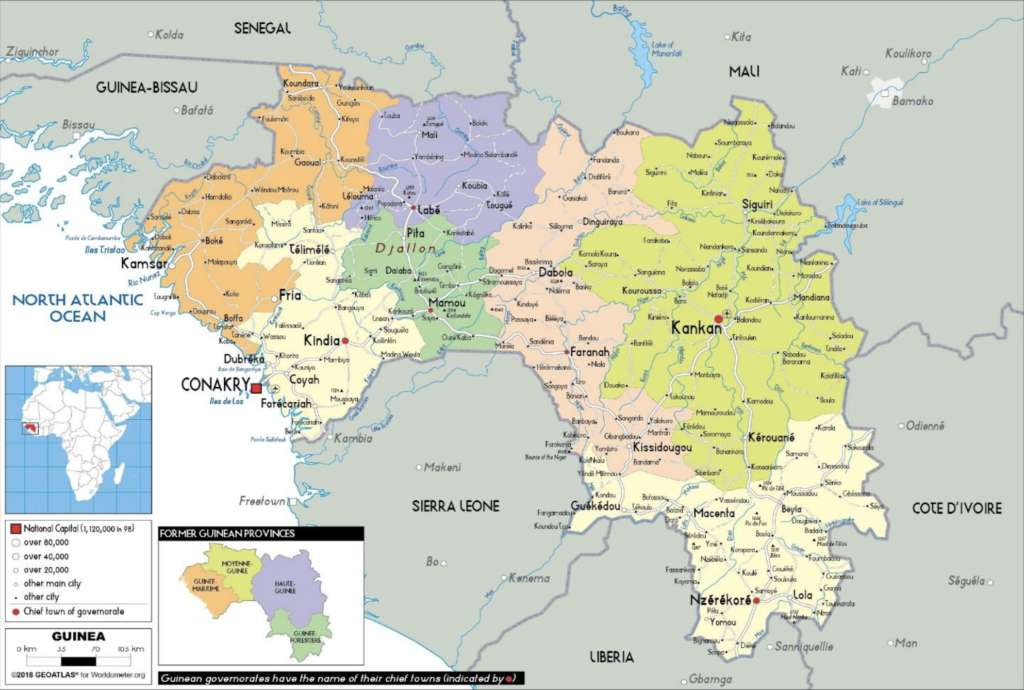
Located on the west coast of Africa, Guinea is bordered by Guinea-Bissau, Senegal, Mali, Côte d’Ivoire, Liberia, and Sierra Leone. It is composed of four natural regions: the Highlands, the Coastal Region, the Forest Region, and Fouta Djallon, each inhabited by diverse ethnic groups with their own cultures, languages, and traditions. The members of the company master not only their own cultural heritage, but also that of other ethnic groups, ensuring a faithful and respectful representation of Guinea’s cultural diversity.
——
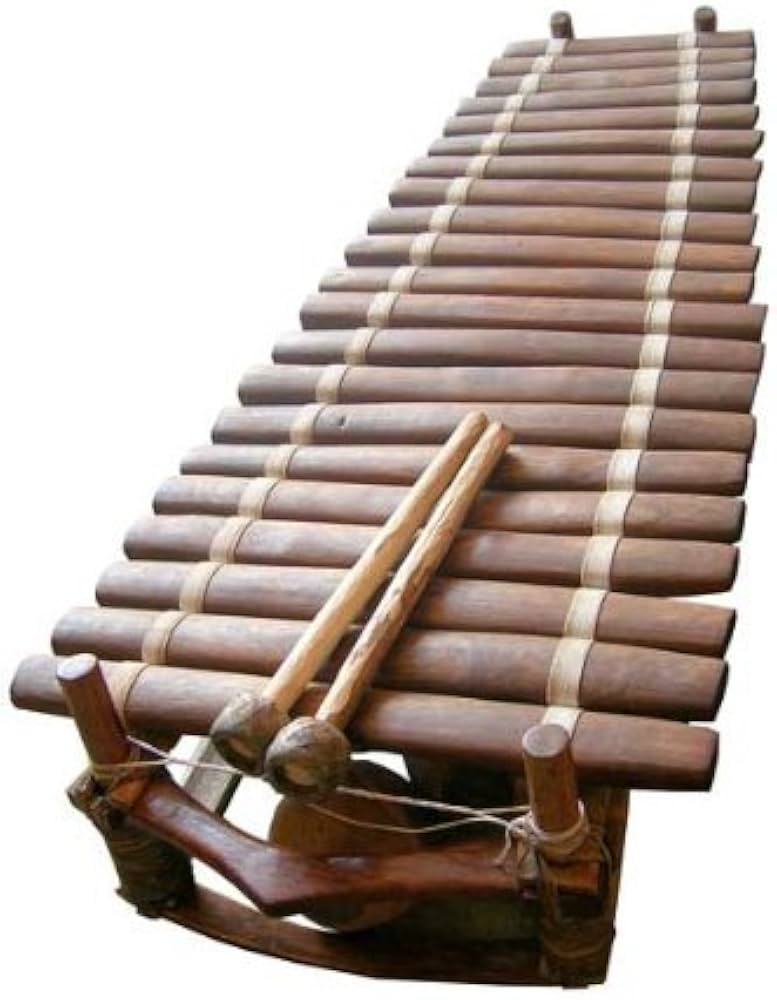
BALAPHONE
With its series of seventeen to twenty-one small rectangular wooden blocks, the balafon is the precursor of the modern xylophone and, like the latter, is played by striking it with two mallets with rubber tips. The blocks are held in place by leather straps. Beneath each block, serving as a resonator, is a suspended calabash gourd, the size of which is determined by the desired pitch. The balafon is one of the most popular instruments in Guinea and is often used to accompany traditional dances throughout the country.
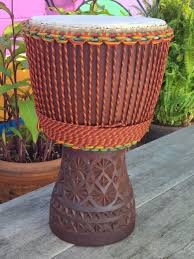
DJEMBE
This drum is carved from a solid block of red tropical wood and features a goatskin head, secured and tightened by a complex system of braided ropes. The djembe is one of the most widely used percussion instruments in Africa and plays a vital role in ceremonies and celebrations. It allows for the performance of a wide variety of rhythms and offers a broad range of sounds.
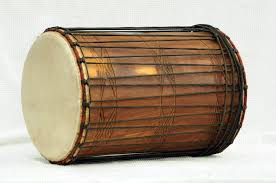
DOUNDOUN
This drum was formerly carved from wood, but it is now made of metal containers covered with animal hide on both sides. This instrument is played while standing.
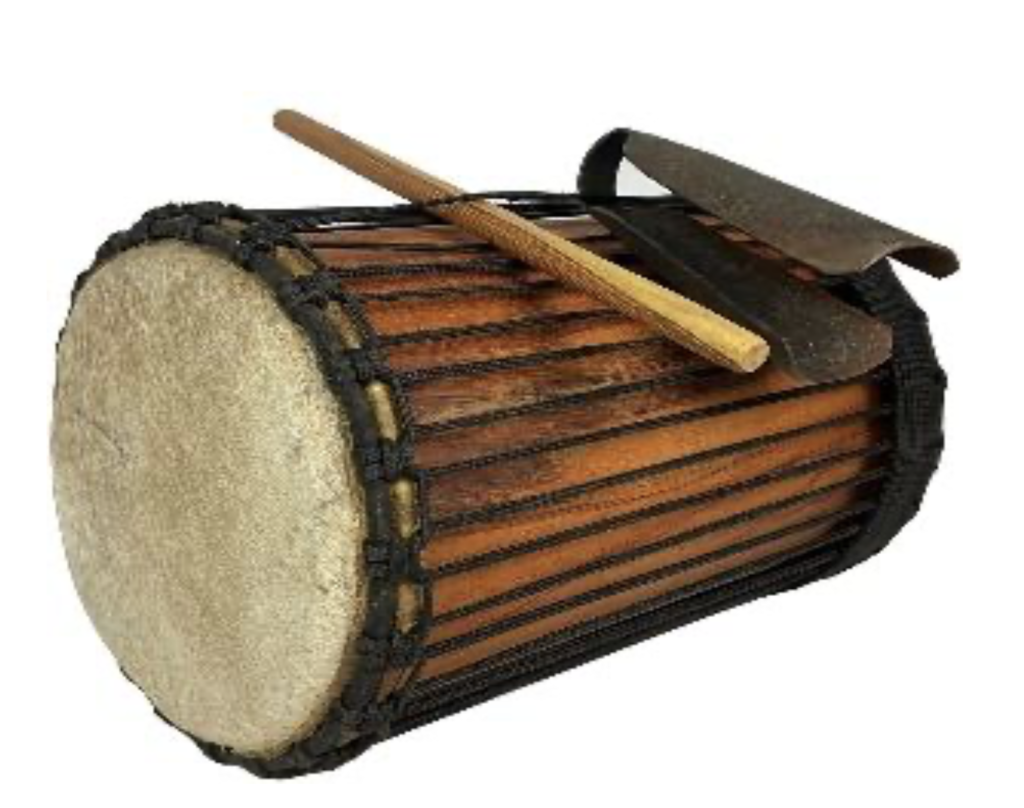
KENKENI
Like the djembe drum, this drum is a primary instrument to which a piece of metal is attached. The musician holds a small stick in one hand and a small bell in the other. In this way, he or she produces two different rhythms and sounds.
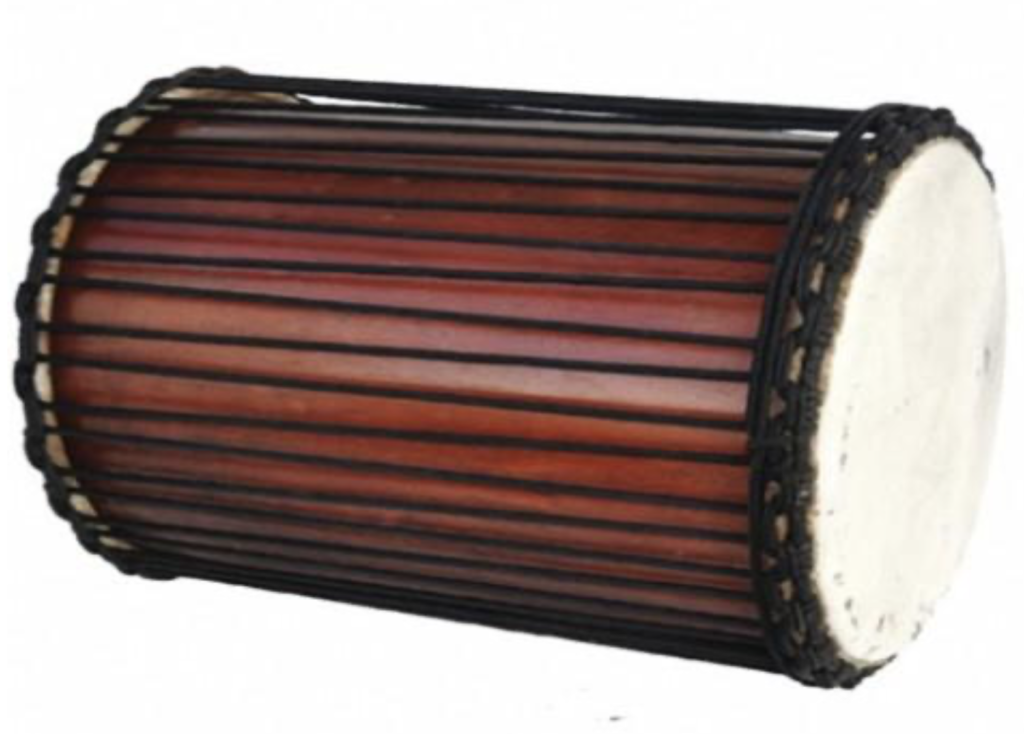
SANGBA
Like the djembe, this drum is a primary instrument to which a piece of metal is attached. The musician holds a small stick in one hand and a small bell in the other. This allows him to produce two different rhythms and sounds.
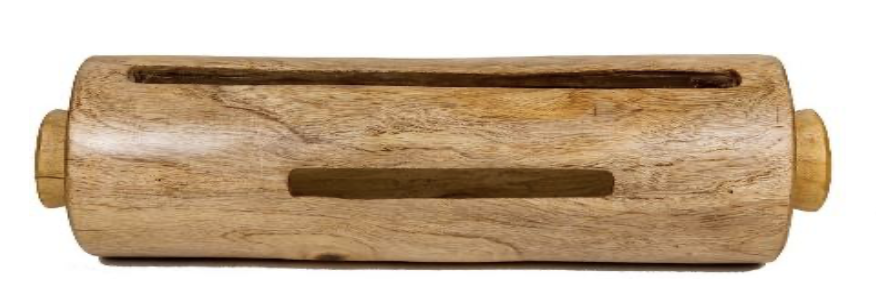
KRIN
The krin is made from a single piece of hollowed-out wood, pierced with small openings. The musician uses two wooden sticks to produce a resonant sound, the pitch of which varies depending on the point of contact. This instrument is used to transmit messages through the forest, as well as to play sacred melodies.
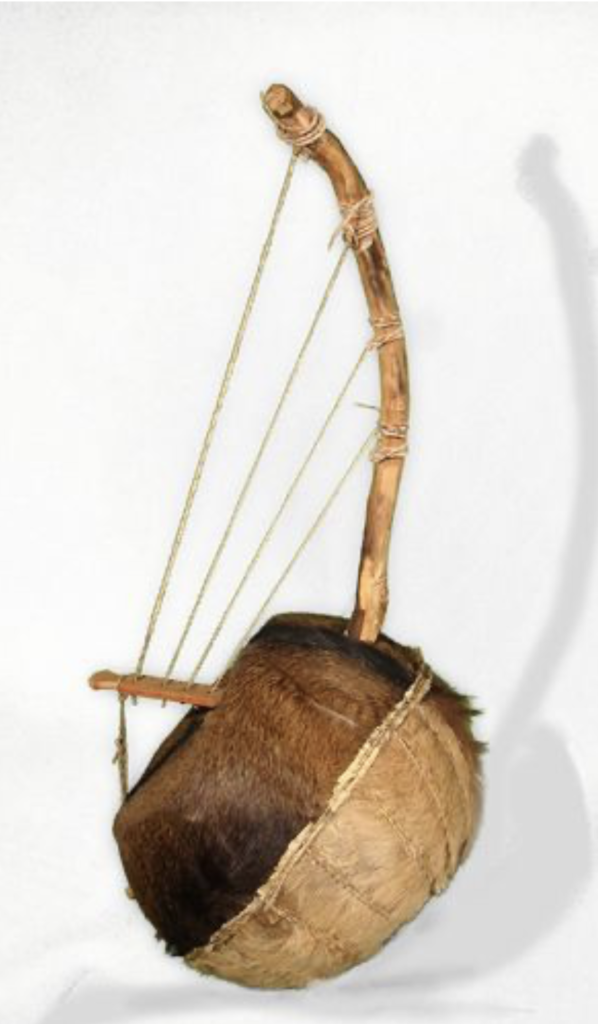
BOLON
The bolon (pronounced bo-lone, also called nbolon) is a traditional Mandinka harp consisting of a large, open gourd covered with skin, a fretless neck, a bridge, and 3 to 4 tunable strings. This instrument has a lower pitch range than other West African harps, such as the ngoni or the kora, and is associated with the warrior caste.
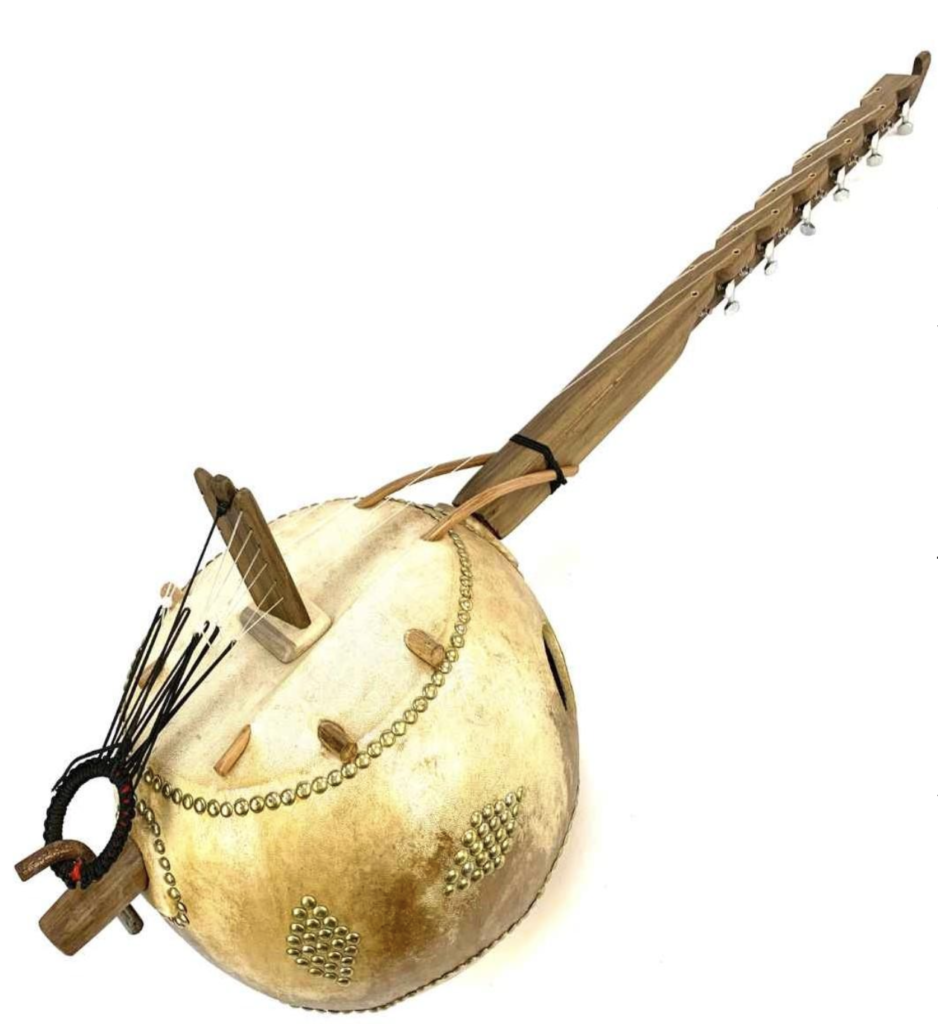
N’GONI
The donso n’goni is a six-stringed harp used by traditional hunter societies in the historical Wassoulou region, which spans Mali, Guinea, Côte d’Ivoire, and Burkina Faso. Donso n’goni are ceremonial instruments, used by hunters to accompany traditional songs and stories. Typically, several musicians play the donso n’goni during a ceremony.
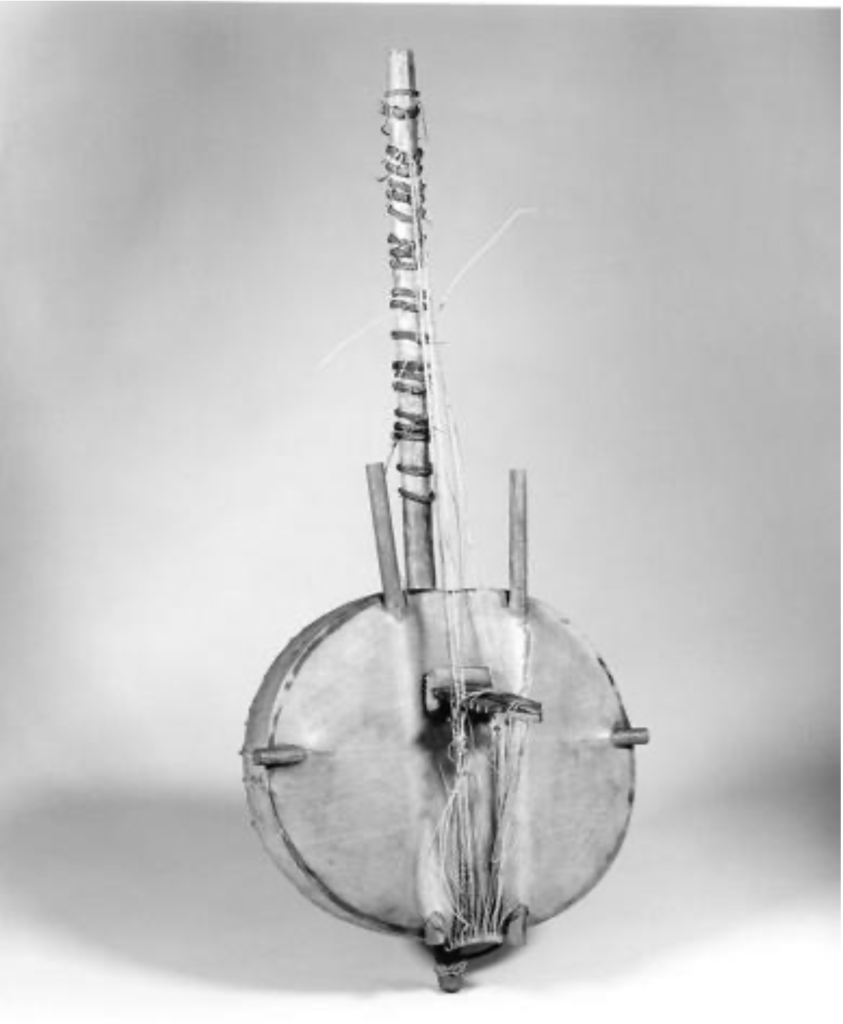
KORA
The kora is made from a hollowed-out calabash and the skin of a sheep, goat, or gazelle. A rounded piece of wood is attached to the calabash, and twenty-one strings are stretched between this piece of wood and a bridge placed on the skin, which serves as a soundboard.
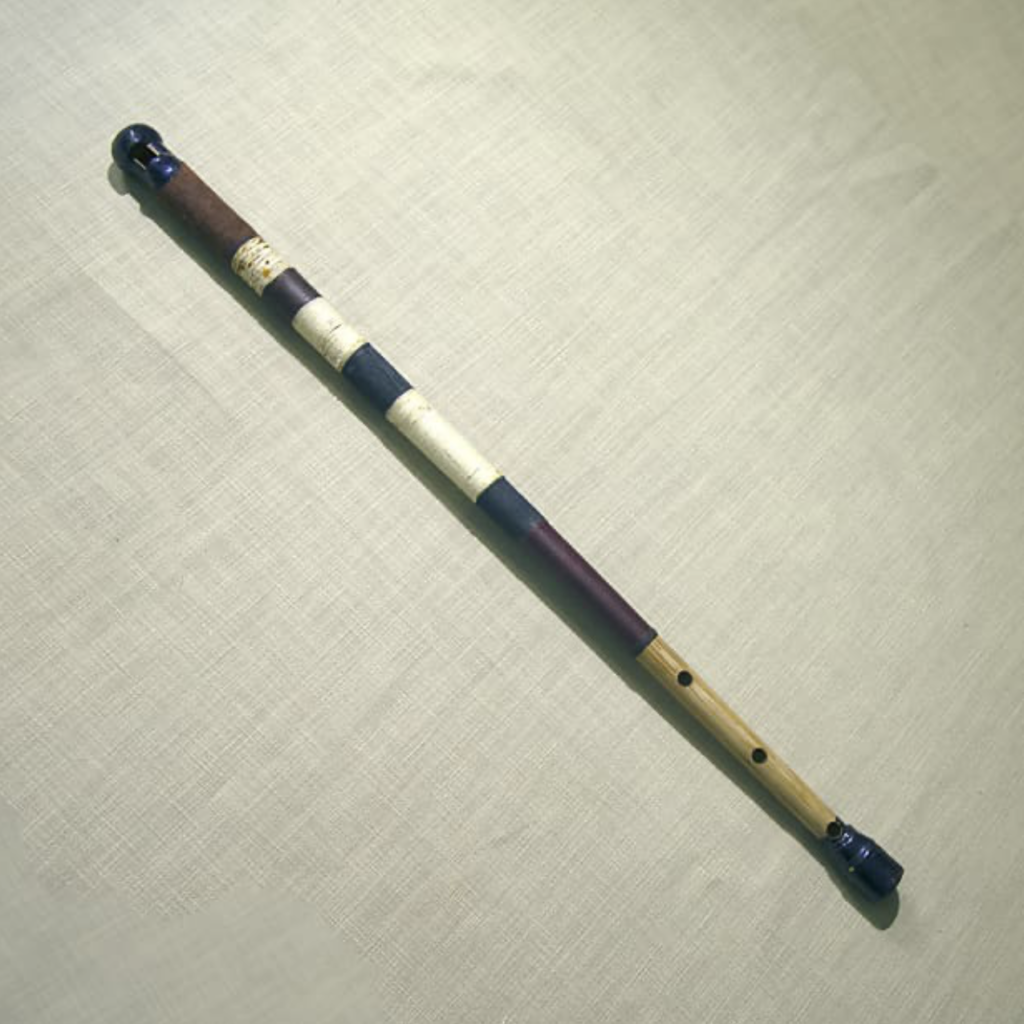
LATERAL FLUTE
The flute is typically made from a piece of bamboo ranging from forty to sixty centimeters in length, with three or four holes. It has an extremely wide range and a versatile sound, making it suitable for most musical ensembles in Guinea. One of the oldest instruments in the world and traditionally associated with shepherds, the flute is highly valued in Guinea for its plaintive and melodious sound.
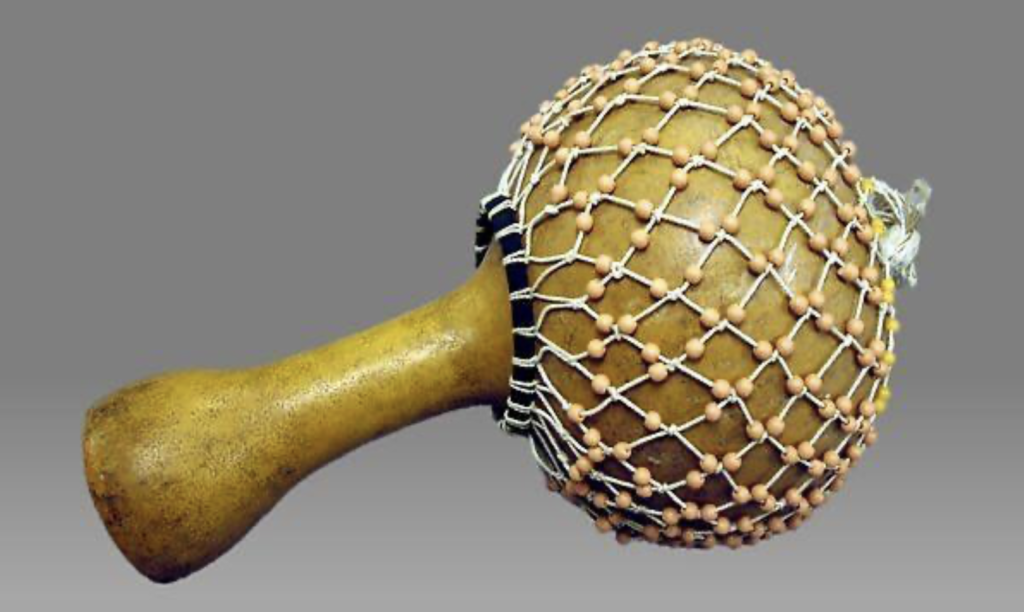
RATTLE
A small gourd containing pebbles, attached to the end of a stick. When shaken, it produces a dry rattling sound, similar to that of maracas, although it is commonly called “castanets” in Guinea. The small gourd is usually decorated with beads and palm leaves.
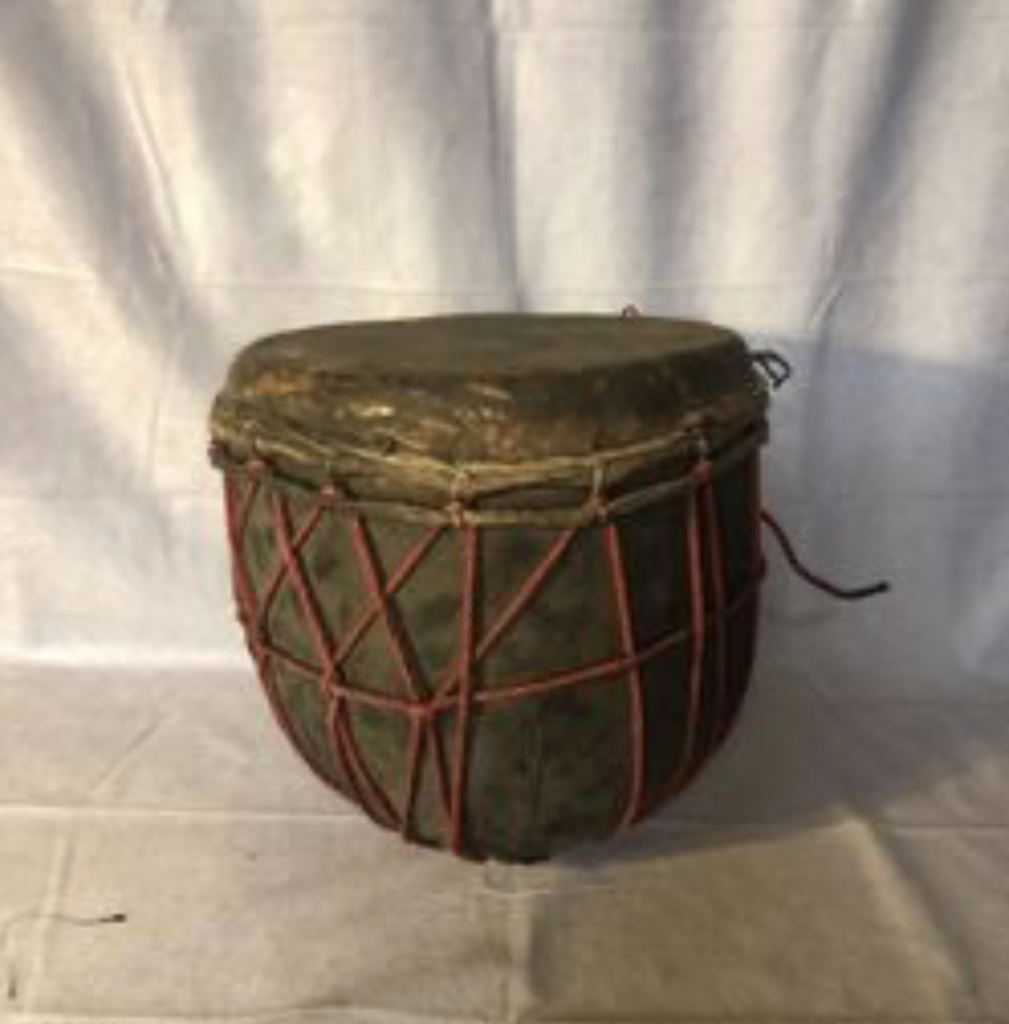
BOTE
Boté drum of the Susu people. This is a handcrafted Boté drum from Guinea, West Africa. The Boté is the traditional instrument of the Susu people. It is played during various celebrations, such as weddings. The Boté is made from a single piece of solid wood, shaped like a bowl. A cowhide is stretched over the top, and it is played while standing, using a wooden mallet. The other hand holds a small bell attached to a finger, and the drum is struck with iron rings attached to the other fingers.


Representation: Columbia Artist Music LLC (CAMI Music)